
What is the Best Solar Lights Outdoor for Your Garden?
In recent years, the popularity of Solar Lights Outdoor has surged, illuminating gardens and patios while promoting sustainability. According to a report by the Solar Energy Industries Association, the market for solar outdoor lighting is expected to grow at a rate of 20% annually. This trend reflects an increasing desire for energy-efficient solutions among homeowners.
Josh Baker, an industry expert at the Solar Lighting Alliance, noted, "Quality solar lights can dramatically enhance outdoor spaces while reducing electricity costs." Yet, selecting the best option can be daunting for consumers. With countless products available, not all solar lights deliver long-lasting performance or brightness. It’s important to consider factors like battery quality and solar panel efficiency.
As more people embrace eco-friendly practices, the right choice of Solar Lights Outdoor can transform gardens into vibrant evening retreats. However, the abundance of choices may baffle consumers. Reflecting on personal experiences may help guide decisions in this shining but sometimes overwhelming marketplace.
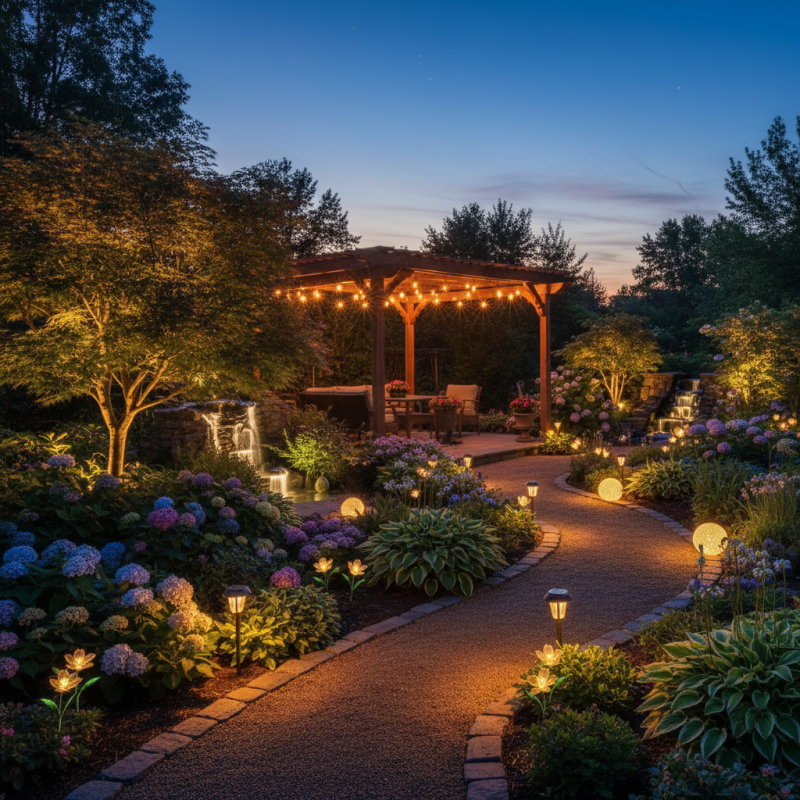
Understanding the Different Types of Solar Lights for Gardens
When choosing solar lights for your garden, it is essential to understand the different types available. Solar stake lights are popular for illuminating pathways. They are easy to install and typically use LED bulbs. However, some models may not provide sufficient brightness for larger areas. A study from the Solar Energy Industries Association indicated that pathway lights can reduce energy consumption by 75% compared to traditional lighting.
Another option is solar flood lights. These lights are powerful and can cover larger spaces. They are ideal for spotlighting trees or garden features. However, they may require more maintenance due to their sensitive components. According to a recent research report, using flood lights can improve security by up to 50%, deterring unwanted visitors.
Finally, solar string lights add a decorative touch. They create a cozy atmosphere for gatherings. However, they may not provide enough light for practical purposes. Many customers report mixed experiences with the battery longevity and brightness. In some cases, users find that their string lights don't last through the night. The choice of solar lights should reflect both aesthetic and functional needs.
Factors to Consider When Choosing Solar Lights for Outdoor Use
When selecting solar lights for outdoor use, several factors must be considered to ensure optimal performance and longevity. Brightness is crucial; consider lumens as the standard measurement. A report by the National Renewable Energy Laboratory reveals that a minimum of 80-100 lumens is ideal for pathway lighting. This level of brightness enhances visibility while preserving the aesthetic of your garden.
The type of solar panel used is another key factor. Monocrystalline panels are more efficient and perform better in low light conditions compared to polycrystalline panels. Industry studies indicate that monocrystalline panels can convert up to 22% of sunlight into usable energy. Additionally, look for fixtures with good battery capacity. A well-functioning battery allows solar lights to operate for 8-12 hours after a full charge.
Don’t overlook the design and material of the lights. Weather resistance is fundamental, especially in regions with heavy rainfall. Plastic materials may fade or crack over time, while metal fixtures often provide greater durability. However, they might require more maintenance. As you explore options, reflect on your specific needs and the environment of your garden. Inconsistent power sources, like trees casting shadows, can also impact performance. Be mindful of these elements as they can lead to frustration down the line.
What is the Best Solar Lights Outdoor for Your Garden? - Factors to Consider When Choosing Solar Lights for Outdoor Use
| Feature | Description | Importance |
|---|---|---|
| Brightness | Measured in lumens, higher brightness is ideal for larger areas. | Critical for visibility and security. |
| Battery Life | Duration of light output after a full charge, typically ranging from 6 to 12 hours. | Essential for nightly operation. |
| Weather Resistance | Materials and IP rating that denote durability against rain and snow. | Important for longevity and reliability. |
| Installation | Ease of installation, often solar lights are wireless and require no complicated setup. | Convenient for quick setup. |
| Design | Variety in styles such as decorative, functional, or integrated designs. | Affects aesthetics of the garden. |
Top Features to Look for in Quality Solar Garden Lights
When choosing solar lights for your garden, focus on essential features. Look for durability. Quality materials should withstand weather changes. The average lifespan of good solar lights is about 50,000 hours. This means less frequent replacements. Ensure your lights are weatherproof. Most experts agree on this requirement for outdoor use.
Consider brightness and range. Look for lights with at least 100 lumens for effective illumination. Some studies indicate gardens benefit from light spreads of 8-10 feet. Motion-sensor capabilities can enhance security. They can save energy too. However, some solar lights may struggle in low-light conditions.
Battery capacity matters. Typically, a 1,200 mAh battery can provide adequate power. But not all batteries perform well. Check for reviews on longevity. Many buyers are surprised by the inconsistency in performance. Choose lights that offer easy recharging options. Convenience plays a crucial role in satisfaction.
Best Solar Lights Outdoor for Your Garden
Comparing Solar Lights: Budget Options vs. Premium Choices
When deciding on solar lights for your garden, you face choices between budget options and premium ones. Budget lights are often more affordable but may lack durability. They usually provide basic illumination. This can be sufficient for small gardens or pathways. However, they may not withstand harsh weather conditions.
Premium solar lights are made with higher-quality materials. They tend to have brighter LEDs and longer-lasting battery life. This means they can illuminate larger areas effectively. However, they come with a higher price tag, which can be a concern for some. The long-term energy savings and performance may justify the cost.
**Tips:** Look for lights with adjustable brightness settings. This feature allows you to customize lighting levels for different occasions. Always check the waterproof ratings, especially if you live in rainy areas. Test your lights upon installation to ensure they work as expected. Don’t overlook the importance of solar panel positioning. If they are shaded, the lights will not perform well.
Best Practices for Installing and Maintaining Solar Lights in Your Garden
When installing solar lights in your garden, placement is crucial. Choose areas that receive sufficient sunlight during the day. Ideally, lights should be positioned in direct sunlight for six to eight hours. This ensures optimal charging. A study from the Energy Saving Trust indicates that proper installation can enhance efficiency by up to 30%.
Maintenance is also vital for longevity. Check connections frequently. Loose wires can significantly decrease performance. Clean the solar panels regularly to remove dirt and debris. Research suggests that dirt can reduce solar panel efficiency by up to 20%. In darker months, consider adjusting the position of lights if you notice a decline in brightness.
Don't overlook battery replacement. Solar lights typically have a lifespan of 2-4 years. Failing to replace old batteries can lead to dim lighting. Additionally, observe the working condition of LED bulbs. They may dim over time, indicating a need for replacement. Reflect on these practices to ensure your garden remains well-lit and inviting.